How to Style a Boho Living Room: 7 Rules Designers Swear By
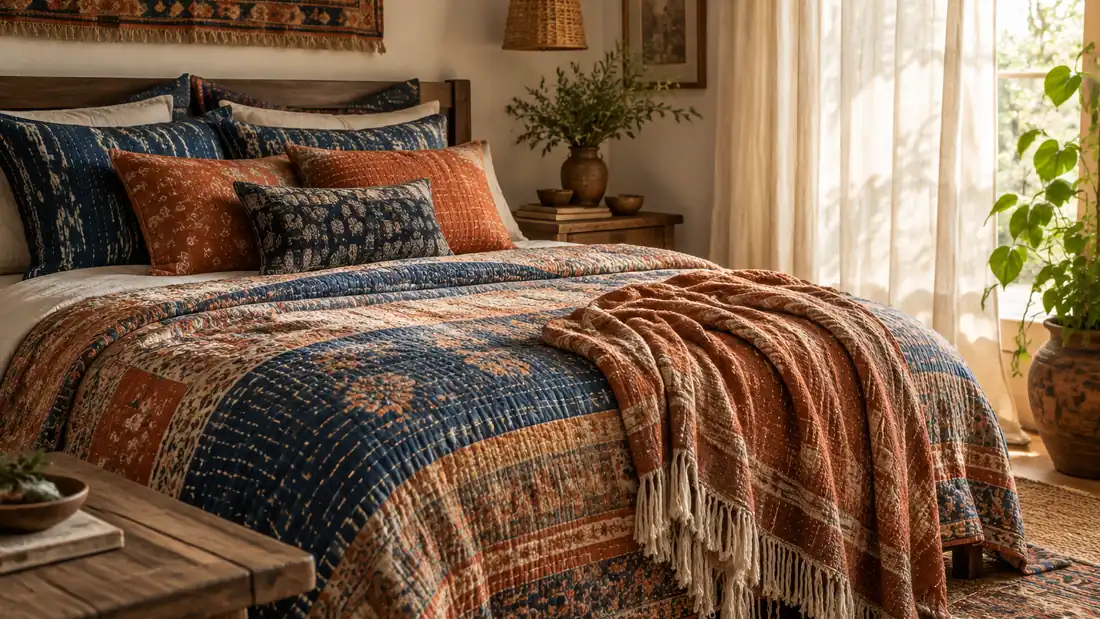
Every great boho room begins with a backdrop that lets texture do the talking. Walls in warm white, cream or pale plaster, a sofa in linen or cotton, flooring in natural wood or jute. This is not boring - it is deliberate. A calm base gives every handmade piece you add later a stage to perform on.
If your walls are already a bold color, do not repaint - just balance them with paler furniture and plenty of natural fiber. Contrast is what makes the style work.
Texture is the entire secret of bohemian style. In any one corner of the room you should be able to spot at least three different materials: a chunky knit throw over smooth linen, a seagrass basket beside a speckled ceramic pot, a rattan chair against a plaster wall.
A quick checklist for a well-layered corner:
Machine-made decor is uniform; handmade decor is alive. A hand-thrown mug has a slight wobble. A handwoven basket has a visible start and end to its coil. These small irregularities are what make a room feel collected rather than decorated.
When shopping, look for the maker's hand: visible stitching on a kantha quilt, tool marks on carved wood, glaze pooling on stoneware. At Velova every piece is one of a kind for exactly this reason.
Boho rooms mix stripes, blocks and florals without looking chaotic because the patterns share a palette. Pick two or three earth tones - terracotta, indigo, cream, sage - and keep every pattern in the room inside that family. A kilim rug, an indigo shibori tapestry and a striped falsa blanket can absolutely share a room when they all speak the same color language.
Overhead lighting alone flattens a boho room. Use three levels: ambient (a woven pendant or paper shade), task (a ceramic table lamp beside the sofa) and accent (candles or a small brass sconce). Warm bulbs only - 2700K or lower. The glow through a rattan weave is half the appeal of boho lighting.
Greenery softens every hard edge. A trailing pothos on a shelf, dried pampas in a terracotta vase, eucalyptus on the dining table. Dried stems are the boho workhorse - they add height and movement, they last for months, and they look right with handmade ceramics.
The final rule is restraint. Boho rooms fail by overcrowding, not by color. Once a season, take one basket of decor out of the room and store it. The pieces that remain get more attention, and the room breathes.
A boho room should feel like a story told slowly - not everything at once, but everything with meaning.
Before buying anything, walk through your house and gather every woven, clay, wooden and textile piece you already own onto the dining table. Rearranging what you have - moving the basket from the bedroom to the living room, floating the shelf sculpture to the coffee table - costs nothing and often completes the look. Most rooms need one or two handmade additions, not a haul.
Every room has fixed elements it should embrace rather than fight. A brick fireplace begs for a wood and textile story. Big windows call for sheer linen and light-filtering rattan shades. Dark floors love cream upholstery and honey-toned wood. Read the room first, then choose handmade pieces in materials that answer what is already there.
If you want a concrete sequence: day one, declutter and pull everything off the shelves. Day two, deep clean and rearrange furniture around a single focal point - a fireplace, a big window, a statement pendant. Day three, rebuild the vignettes using the rules above: odd numbers, three textures per corner, one plant per surface. Take photos as you go; a camera flattens the room and shows you exactly which corner still feels bare.
Start with one handmade piece you love and build the room around it. Our handwoven baskets and ceramic vases are the easiest place to begin.
Ready to start layering? Shop the collection - free US shipping, tax free.